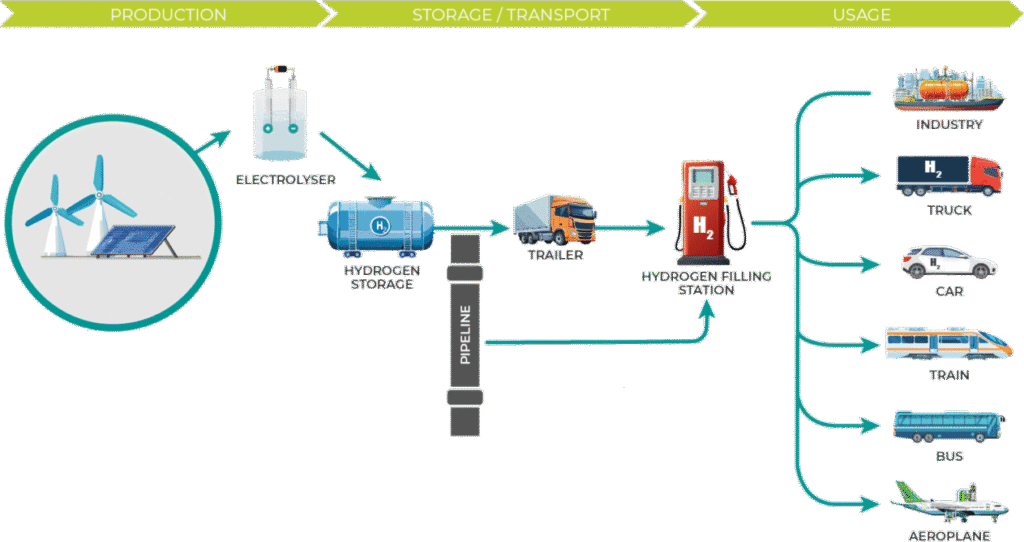
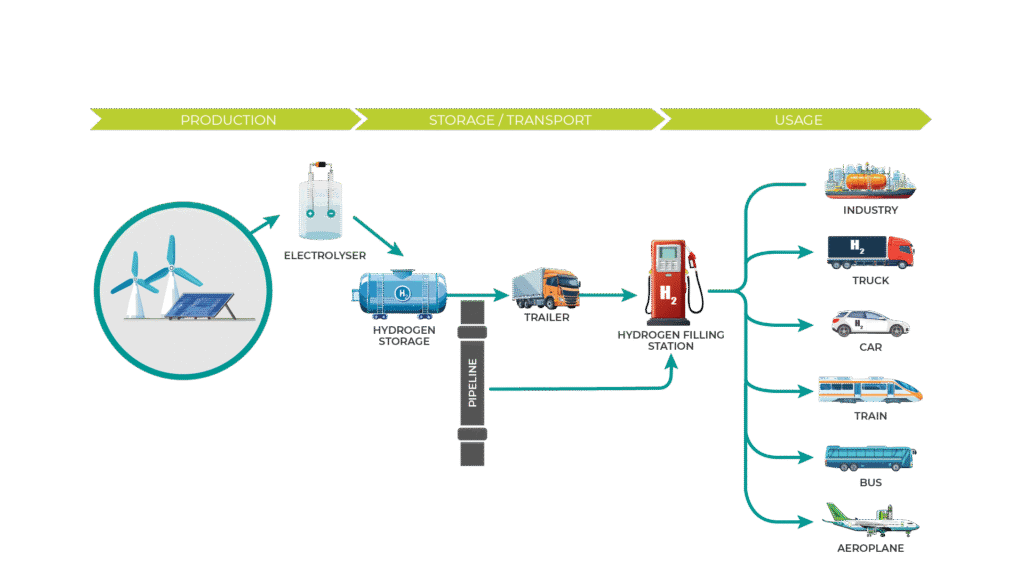
As India charts its course toward a net-zero future by 2070, green hydrogen has emerged as a strategic energy vector—especially in decarbonizing mobility. Green hydrogen has become essential in this transformation as it releases water vapor as a by-product.
➢Indian cities rank among the most polluted in the world. Hydrogen fuel cell vehicles (FCEVs) emit only water vapor, offering a clean alternative to diesel and petrol.
➢Faster Refueling than EVs FCEVs can be refueled in 3–5 minutes, making them ideal for public transport, logistics, and long-haul trucks, where downtime is costly.
➢Longer Driving Range Green hydrogen enables a longer driving range than battery electric vehicles (BEVs)—important for India’s vast intercity transport routes.
➢Energy Security & Import Reduction India currently imports over 85% of its crude oil. Replacing diesel with domestically produced green hydrogen can drastically improve energy independence.
India’s National Green Hydrogen Mission (budgeted at ₹19,744 crore) is a game changer. It targets:
➢Production of 5 MMT of green hydrogen annually by 2030.
➢Incentives for Electrolyzer manufacturing and hydrogen hubs.
➢Development of hydrogen Refueling infrastructure along highways and ports
Cement production is responsible for approximately:
8%
of Global emissions
Cement Industry
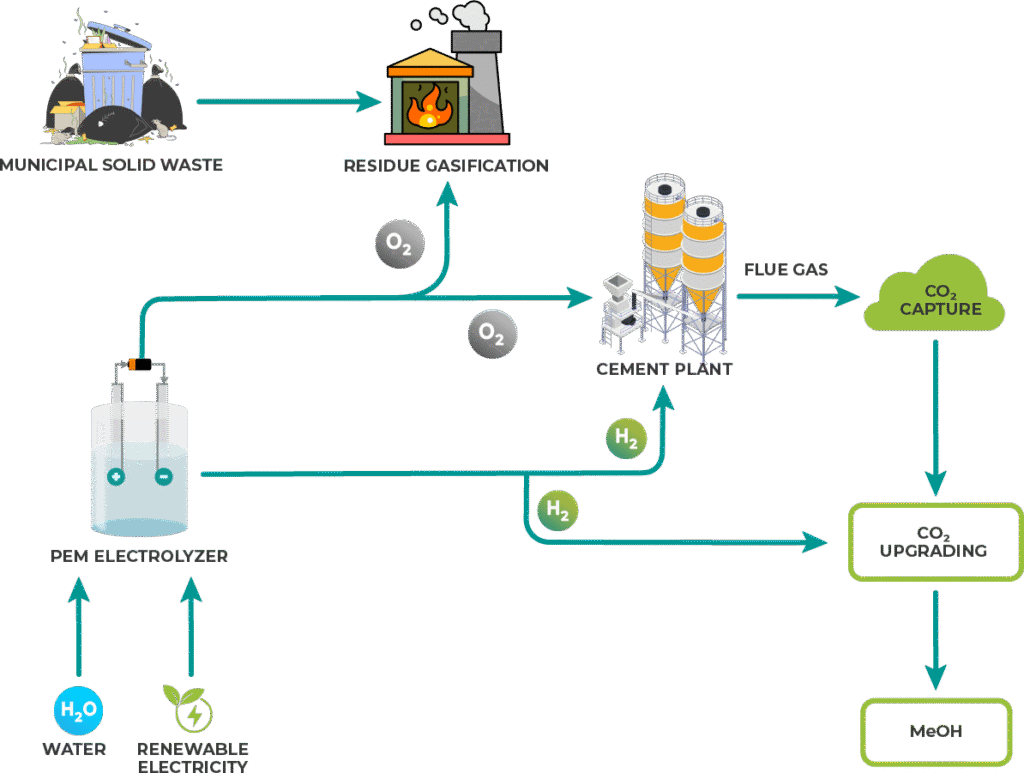
Cement is one of the most essential materials in modern construction, which forms the backbone of infrastructure worldwide. Raw material preparation, clinker burning, and cement grinding are the three major processes involved in cement manufacturing.
INDIAN GOVERNMENT’S COMMITMENT TOWARDS GREEN CEMENT
Know More
➢ Capital Subsidies: The government offers capital investment subsidies for the installation of green cement plants. ➢ Solar and Wind Energy Incentives: The Ministry of New and Renewable Energy (MNRE) subsidies for both solar energy generation and wind energy projects. ➢ Reduced Corporate Tax Rates: For new manufacturing units set up to produce green hydrogen, including for industrial uses like cement production, there is a lower corporate tax rate of 15% (plus applicable surcharges and cess) ➢ Custom Duty Exemptions: The government may offer custom duty exemptions on the import of capital goods and equipment used for green hydrogen production, including electrolyzers and fuel cells. ➢ Waiver of Inter-State Transmission Charges: Renewable energy projects set up to produce green hydrogen are exempt from inter-state transmission charges until 2025. , which can lower operational costs.
Fertilizer Industry
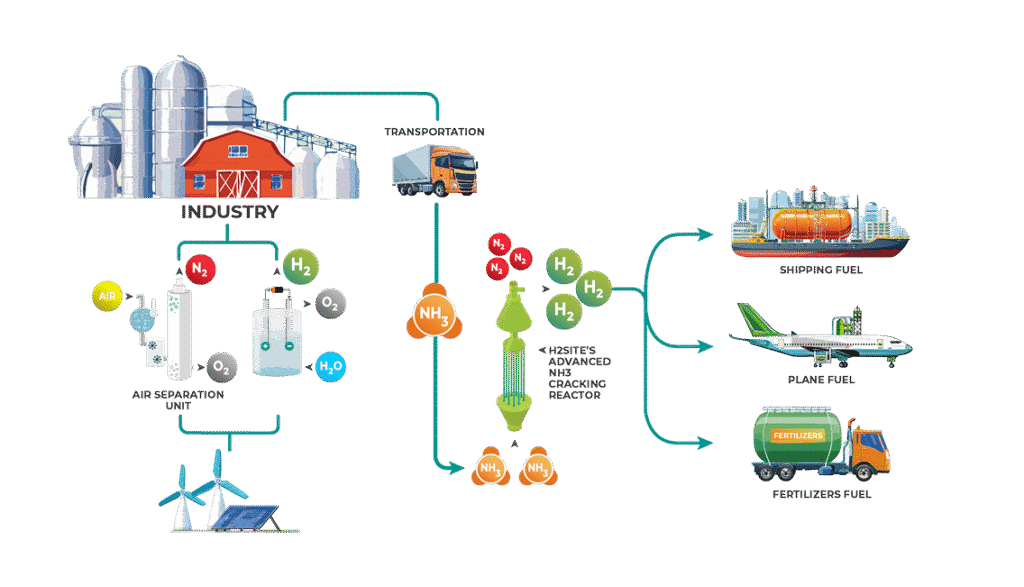
Ammonia is one of the most widely produced chemicals in the world. Traditional ammonia production process relies heavily on fossil fuels – natural gas and coal. The carbon intensive methods used release approximately 1.8-3.5 tons of CO2 per ton of ammonia depending on the feedstock.
➢ Production-Linked Incentive (PLI) Schemes: Green ammonia production are eligible for PLI schemes that provide financial incentives based on production output. ➢Capital Subsidies: These subsidies cover a portion of the setup costs and renewable energy infrastructure. ➢Renewable Energy Integration: The government provides subsidies and incentives for renewable energy installations (such as solar or wind farms, to power electrolysis processes), including accelerated depreciation, capital cost reductions, and feed-in tariffs. ➢ Solar and Wind Energy Incentives: The Ministry of New and Renewable Energy (MNRE) offers subsidies for both solar energy generation and wind energy projects, which are essential for green ammonia production. ➢ Priority Export Agreements: Green ammonia producers may benefit from the government’s focus on establishing green hydrogen and ammonia export corridors to regions such as Europe and Japan, which are key markets for green energy products.
Power Industry
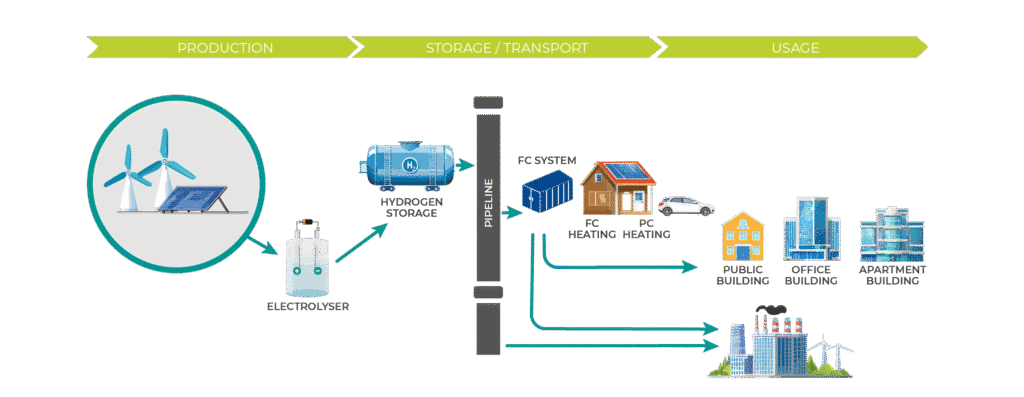
India’s power sector is undergoing a historic transition—from fossil-fueled reliability to renewable-driven sustainability. As the country targets 500 GW of non-fossil fuel capacity by 2030, one technology stands out as a key enabler of this shift: green hydrogen. India’s power industry is contributing heavily to carbon emissions and air pollution.
75%
Produced through the electrolysis of water using renewable energy, green hydrogen acts as both a clean energy carrier and a long-duration storage solution, uniquely positioned to support India’s decarbonization goals across the power value chain.
Under the National Green Hydrogen Mission, the Indian government is pushing hydrogen use in the power sector via:
Viability gap funding for hydrogen-based energy storage projects
Pilot projects for 100% H2-fired gas turbines
Transmission reforms to accommodate green hydrogen hubs and RE storage
Development of hydrogen-ready infrastructure for thermal plants
Steel Industry
Steel is one of the most important engineering and construction materials. Currently the steel industry is among the three biggest producers of carbon dioxide.
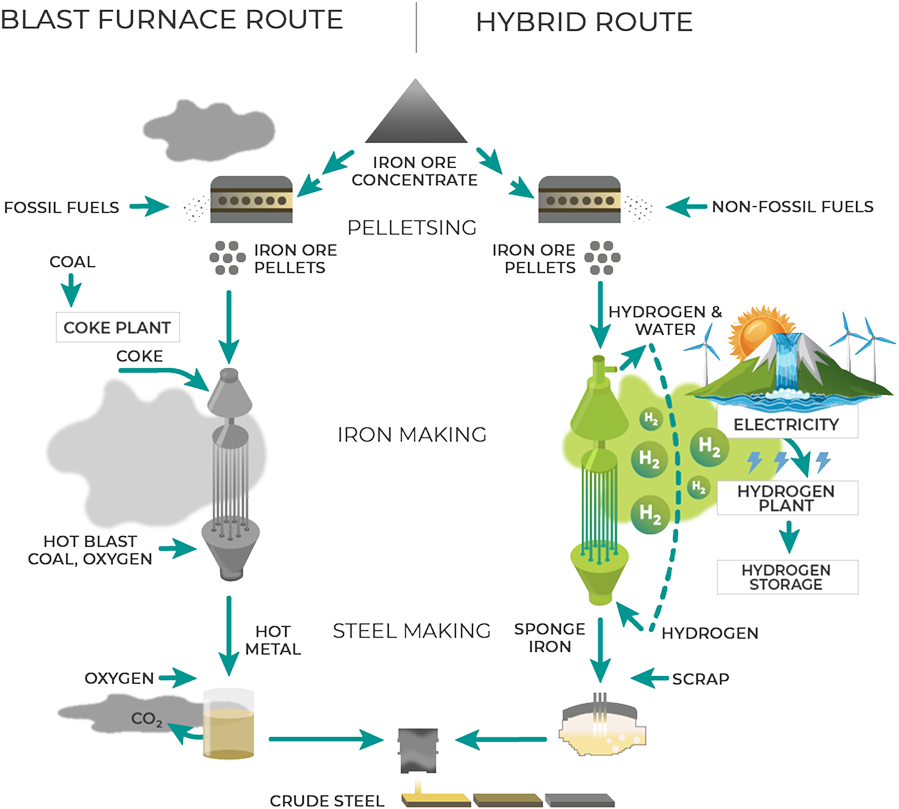
Decarbonisation of the iron-making process therefore requires replacing carbon/carbon monoxide in this reaction with another gas that would lead to lower or zero carbon emissions, such as methane or hydrogen.
Every ton of steel produced emits on average:
1.85
Tons of CO2
8%
Global Co2 emissions
Industrial Application of Green Hydrogen in Steel Industry:
Direct Reduction: Green hydrogen reduces iron ore to DRI/sponge iron for use in Electric Arc Furnaces (EAFs).
Electric Arc Furnaces: Replaces fossil fuels as reducing agent.
Blast Furnaces: Injected hydrogen lowers coke usage and emissions.
Annealing & Alloys: Used as clean protective/reducing gas.
Energy Storage: Stores renewable energy for steel operations.
Pharmaceutical Industry
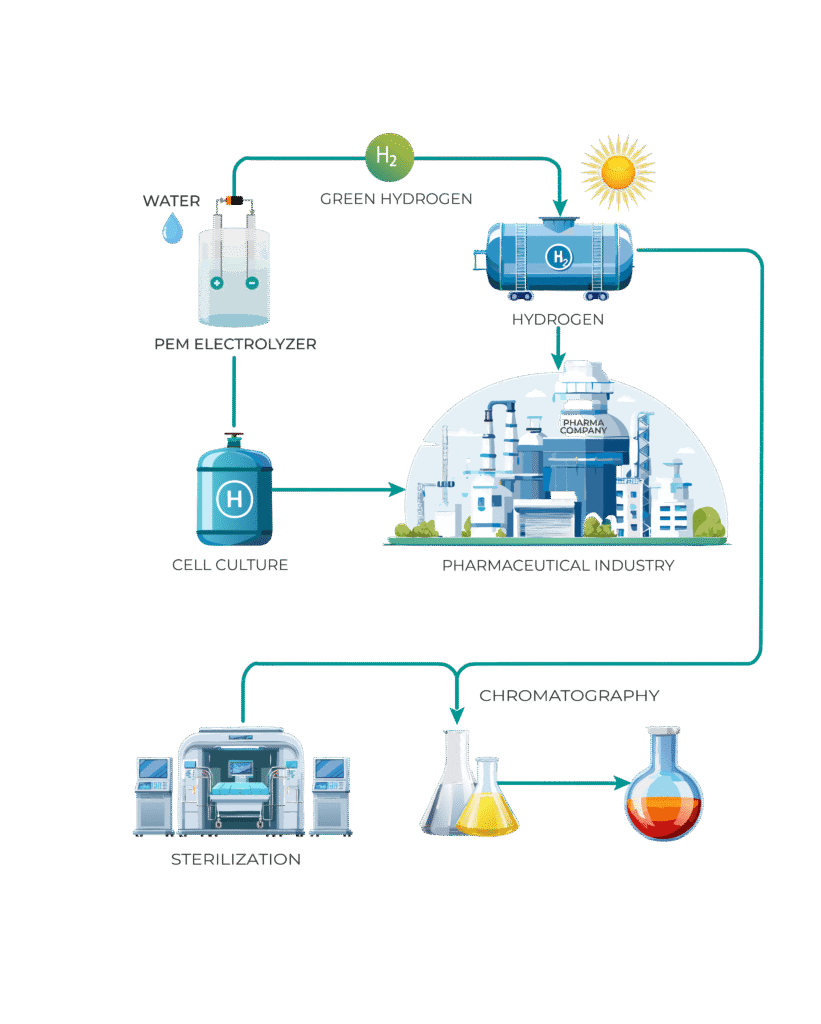
Decarbonizing the pharmaceutical industry involves integrating green hydrogen and renewable energy, reducing fossil fuel reliance, and enhancing sustainability across manufacturing processes.
Industrial Applications:
Onsite Green Hydrogen Production
Replaces natural gas in boilers, reducing emissions.
Industrial Applications:
High-Temperature Processes
Hydrogen combustion provides clean heat for distillation & drying.
Chemical Synthesis
Utilizes green hydrogen in producing essential compounds like ammonia & methanol.
Energy Storage
Stores excess renewable energy as hydrogen for consistent power supply.
Hydrogenation Reactions
Employs hydrogen in synthesizing vitamins & pharmaceuticals.
Future is Greener. By 2030 you'll be driving a Hydrogen Powered Vehicle.
From concept to commissioning, CBR Energy is your partner in pioneering
next-generation clean Energy Applications.